info@clicktranss.com


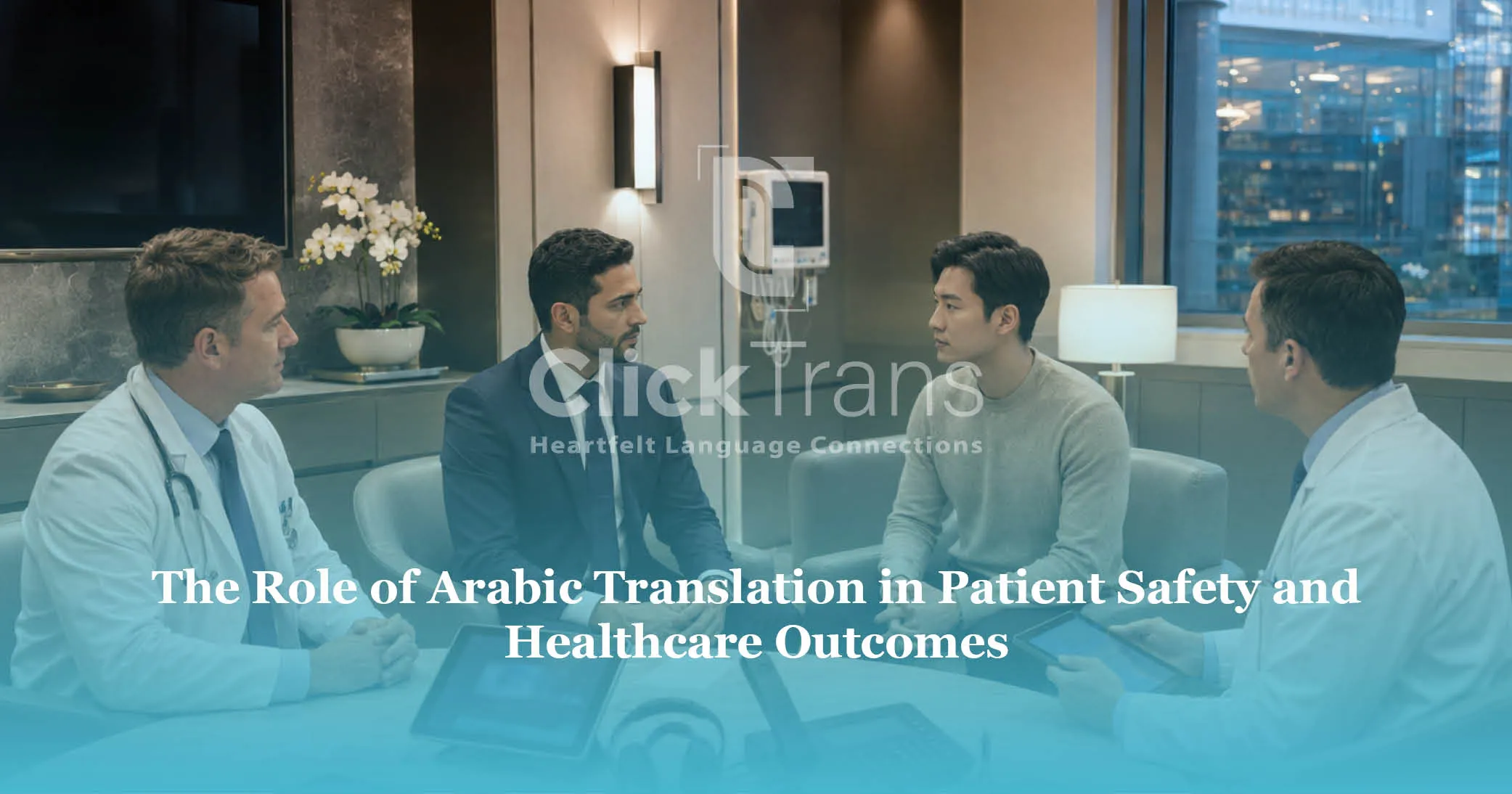
Table of Contents
Introduction
Patient safety is one of the most important priorities in healthcare. Every diagnosis, treatment decision, medication prescription, and follow-up recommendation depends on clear communication between healthcare providers and patients. When patients fully understand their healthcare information, they are better equipped to make informed decisions, follow treatment plans, and participate actively in their care.
However, communication challenges can arise when patients have limited English proficiency (LEP). Language barriers may affect a patient’s ability to understand diagnoses, medication instructions, consent forms, discharge plans, and other critical healthcare information. In these situations, misunderstandings can contribute to medical errors, treatment delays, reduced patient satisfaction, and poorer health outcomes.
Arabic-speaking communities represent an important and growing patient population throughout the United States. Hospitals, clinics, healthcare systems, and healthcare professionals increasingly encounter patients who prefer receiving healthcare information in Arabic. Providing accurate Arabic translation services helps healthcare organizations improve communication, enhance patient safety, and support better healthcare outcomes.
At ClickTrans, we help healthcare providers communicate effectively with Arabic-speaking patients through specialized Arabic medical translation services that prioritize accuracy, clarity, and patient understanding.
Why Communication Is Essential for Patient Safety
Effective communication is at the core of safe healthcare delivery.
Healthcare providers must communicate important information regarding:
- Diagnoses
- Treatment plans
- Surgical procedures
- Medication instructions
- Recovery expectations
- Follow-up care
Patients must be able to understand this information clearly to make informed healthcare decisions.
When communication breaks down, the consequences can be significant. Patients may misunderstand instructions, fail to follow treatment recommendations, or delay seeking medical attention when complications arise.
Professional Arabic translation helps ensure healthcare information remains accurate, understandable, and accessible to Arabic-speaking patients.
How Language Barriers Affect Healthcare Outcomes
Language barriers can influence nearly every stage of the healthcare journey.
Patients with limited English proficiency may face difficulties when:
- Scheduling appointments
- Completing intake forms
- Understanding diagnoses
- Reviewing treatment options
- Following medication instructions
- Accessing healthcare resources
These challenges can affect both patient experiences and clinical outcomes.
Common Effects of Language Barriers
| Communication Challenge | Potential Impact |
| Misunderstood Diagnosis | Delayed treatment |
| Medication Confusion | Incorrect medication use |
| Poor Follow-Up Understanding | Readmission risk |
| Incomplete Consent | Limited patient understanding |
| Difficulty Accessing Information | Reduced healthcare engagement |
Reducing language barriers helps healthcare providers improve communication and strengthen patient safety efforts.
Medication Errors and Translation Accuracy
Medication-related communication is one of the most critical areas of healthcare translation.
Patients must understand:
- Dosage instructions
- Administration schedules
- Potential side effects
- Drug interactions
- Safety precautions
Even a minor misunderstanding can result in incorrect medication use.
For example, confusion regarding dosage frequency, timing, or administration methods may increase the risk of adverse outcomes.
Professional Arabic translation helps ensure medication guides, prescription instructions, and pharmaceutical materials are communicated accurately and clearly.
Medication Documents Commonly Requiring Translation
| Document Type | Purpose |
| Prescription Instructions | Proper medication use |
| Medication Guides | Drug safety information |
| Patient Information Leaflets | Treatment education |
| Pharmaceutical Warnings | Risk communication |
| Follow-Up Instructions | Ongoing medication management |
Accurate translation supports patient understanding and safer medication use.
The Importance of Informed Consent
Informed consent is a fundamental component of ethical healthcare practice.
Patients should fully understand:
- The purpose of a procedure
- Potential benefits
- Possible risks
- Alternative treatment options
- Recovery expectations
If patients cannot understand consent documentation, they may be unable to make truly informed decisions regarding their healthcare.
Professional Arabic translation helps ensure consent forms are accessible, accurate, and understandable for Arabic-speaking patients.
Types of Consent Documents
| Consent Form Type | Examples |
| Surgical Consent | Surgical procedures |
| Treatment Consent | Medical therapies |
| Diagnostic Consent | Imaging and testing |
| Clinical Trial Consent | Research participation |
| Telehealth Consent | Virtual healthcare services |
Providing translated consent forms supports transparency, trust, and patient participation.
Discharge Instructions and Patient Recovery
Patient safety extends beyond the hospital stay.
Discharge instructions often include critical information regarding:
- Medication schedules
- Follow-up appointments
- Activity restrictions
- Dietary recommendations
- Warning signs requiring medical attention
When patients misunderstand discharge instructions, they may experience complications or require additional medical care.
Providing professionally translated Arabic discharge materials helps patients understand how to manage their recovery and when to seek additional medical attention.
Reducing Hospital Readmissions Through Better Communication
Hospital readmissions remain a significant concern for healthcare organizations.
Patients are more likely to return to the hospital when they:
- Do not understand treatment plans
- Miss follow-up appointments
- Take medications incorrectly
- Fail to recognize warning signs
Language barriers can contribute to these issues.
Arabic translation services help healthcare organizations improve patient understanding after discharge, supporting continuity of care and reducing communication-related risks.
Communication and Readmission Risk
| Patient Understanding Level | Potential Outcome |
| High Understanding | Better treatment adherence |
| Clear Discharge Communication | Improved recovery |
| Accurate Medication Use | Reduced complications |
| Strong Follow-Up Compliance | Lower readmission rates |
Better communication often leads to better patient outcomes.
Improving Patient Engagement Through Language Access
Patient engagement is closely linked to healthcare outcomes.
Patients who understand healthcare information are more likely to:
- Ask questions
- Participate in decision-making
- Follow treatment recommendations
- Attend follow-up appointments
- Take medications correctly
Providing Arabic-language healthcare materials helps patients become active participants in their care.
This engagement contributes to stronger patient-provider relationships and improved healthcare experiences.
Building Trust With Arabic-Speaking Patients
Trust is essential in healthcare.
Patients who feel understood and respected are more likely to communicate openly with providers and seek care when needed.
Professional Arabic translation demonstrates a healthcare organization’s commitment to serving diverse communities and improving healthcare accessibility.
Translated materials help patients feel more confident when discussing:
- Health concerns
- Treatment options
- Medication questions
- Preventive care recommendations
Improved trust often leads to stronger healthcare relationships and better patient experiences.
Human Translation vs Machine Translation in Patient Safety
Machine translation tools have become increasingly common, but healthcare communication requires a high level of accuracy.
Medical documents often contain:
- Specialized terminology
- Context-dependent language
- Legal disclosures
- Patient-specific information
Automated translation systems may struggle with medical nuance and context.
Professional human translators provide:
- Medical terminology expertise
- Cultural understanding
- Quality assurance review
- Consistent terminology usage
For patient safety-related communications, human review remains an essential component of quality healthcare translation.
How Professional Arabic Translation Improves Healthcare Outcomes
Healthcare organizations that invest in professional Arabic translation services often experience significant benefits.
Benefits of Professional Translation
| Benefit | Healthcare Impact |
| Better Communication | Improved patient understanding |
| Enhanced Safety | Reduced communication errors |
| Improved Adherence | Better treatment compliance |
| Greater Accessibility | Easier access to healthcare information |
| Higher Satisfaction | Better patient experience |
| Stronger Trust | Improved patient-provider relationships |
These benefits contribute to safer and more effective healthcare delivery.
Why Healthcare Organizations Choose ClickTrans
Healthcare communication requires more than language skills. It requires expertise in medicine, patient communication, cultural understanding, and terminology management.
ClickTrans provides professional Arabic medical translation services for healthcare organizations throughout the United States. Our experienced medical translators help hospitals, clinics, healthcare systems, pharmaceutical companies, and insurance providers communicate effectively with Arabic-speaking patients.
Our services include:
- Medical records translation
- Consent form translation
- Patient education materials
- Discharge instructions
- Medication guides
- Healthcare websites
- Telehealth content
By helping healthcare providers communicate clearly and accurately, ClickTrans supports patient safety initiatives and better healthcare outcomes.
Related Resources
Continue exploring healthcare communication and language access:
Why U.S. Hospitals Need Professional Arabic Translation Services for LEP Patients
Arabic Translation for Medical Records, Consent Forms, and Healthcare Documents in the USA
Language Access Requirements for Healthcare Providers in the USA
Together, these resources provide a comprehensive guide to improving communication with Arabic-speaking patients.
Conclusion
Patient safety depends on effective communication. When patients understand diagnoses, treatment recommendations, medication instructions, and follow-up care plans, they are better positioned to participate actively in their healthcare and achieve positive outcomes.
Language barriers can create challenges that affect patient understanding and healthcare experiences. Professional Arabic translation services help healthcare organizations reduce these barriers while improving accessibility, patient engagement, and communication quality.
Whether translating medical records, consent forms, discharge instructions, medication guides, or educational resources, accurate translation plays a critical role in supporting patient safety.
ClickTrans is proud to help healthcare organizations across the United States improve communication and healthcare outcomes through professional Arabic medical translation services.