info@clicktranss.com


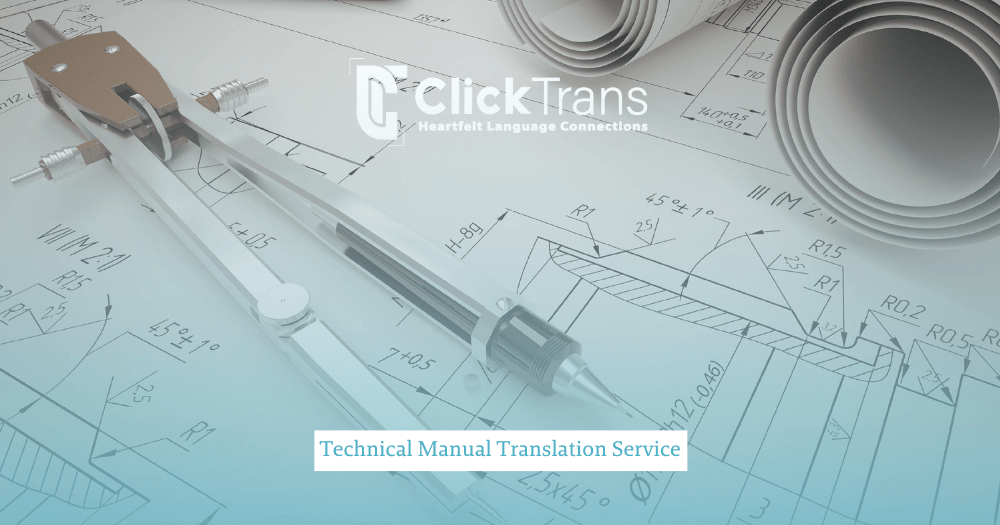
Table of Contents
In a competitive market that requires accuracy and strict compliance, technical manual translation services in the USA are crucial to the success of companies inside and outside the United States.
Whether you are launching a new product or expanding your operations into multiple markets, any mistake in user instructions or technical warnings can affect the customer experience, safety, and regulatory compliance.
Therefore, a professional technical manual translation service must be accurate and reliable for user manuals, installation guides, and technical documentation, ensuring clarity of the technical message, compliance with U.S. standards, and enhancing customer confidence in your brand from day one.
Trusted by manufacturers entering the U.S. market and expanding globally.
Professional Technical Manual Translation Service
Product manuals include a number of essential documents such as user manuals, instruction guides (instruction manual translation), technical manuals, and installation guides. These documents not only explain how to use the products, but also outline safety standards, technical specifications, and operational steps that the end user relies on.
Professional translation of product manuals ensures the accurate conveyance of technical meaning without losing details or misusing terminology. Any error in translating operating procedures or safety warnings can lead to product misuse or legal issues.
Therefore, professional translation relies on terminology consistency, precise technical review, and ensuring clarity of instructions in accordance with user expectations and target market standards.
Why Accurate Product Manual Translation Is Essential
While technical manual translation service focuses on structured accuracy, product manual translation also requires precise technical terminology, clear safety instructions, mandatory warnings, and technical specifications that do not tolerate interpretation. Any error in translating these elements can change the intended meaning or weaken the clarity of the instructions, directly affecting the user experience and the quality of product use.
Therefore, product manual translation is not merely a linguistic transfer, but rather a technical process that requires accurate technical knowledge and contextual understanding within the relevant industry.
Accurate translation of product manuals is essential for the following reasons:
- Ensuring the correct use of the product in accordance with the manufacturer’s intended operating mechanism
- Reducing the risk of misunderstanding safety instructions and mandatory warnings
- Protecting the company from legal risks arising from unclear or misleading instructions
- Minimizing customer complaints caused by installation or operational errors
- Supporting compliance with industry standards and regulatory requirements in the target market
When the translation is accurate and consistent, it enhances the perceived quality of the product, preserves brand reputation, and reinforces the company’s commitment to professional and regulatory standards without the need for corrective actions later.
Looking for accurate, certified, and fast translations?
Contact us today and request a free quote.
Product Manual Translation for Compliance and Regulatory Requirements
In the U.S. market, operating instructions and warnings in product manuals are not secondary texts; they are structured elements governed by specific standards such as ANSI Z535, which is widely used to present safety information and warnings in a consistent and standardized format across manuals and industrial equipment.
These elements may also be evaluated in legal proceedings as a benchmark for determining whether a product provided adequate and clearly communicated risk warnings.
In sectors such as medical devices, automotive, electronics, and industrial equipment, regulatory authorities assess not only the product itself but also the accompanying documentation, particularly safety instructions, operating guidance, and warranty terms, as part of overall regulatory compliance.
Translating these elements accurately is not merely a linguistic task, but a precise transfer of legal and operational intent:
- Inaccurate safety instructions may expose users to risk or increase the company’s liability.
- Errors in warranty terms may alter consumer rights and manufacturer obligations.
- Inconsistent or unclear regulatory statements may delay market entry or even lead to product recalls.
Accurate translation ensures that safety instructions, warranty terms, and regulatory statements are understood and applied in accordance with regulatory expectations and user requirements in the target market, without ambiguity or misinterpretation.
For example, a minor inconsistency in torque specifications within an installation manual can result in improper assembly, operational failure, or liability exposure in the U.S. market.
Translation of User Guides, Instruction Manuals, and Technical Documentation
Technical manual translation requires a precise understanding of document structure, procedural sequencing, and product-specific terminology. These documents are not written for general reading; they are intended to guide operation, installation, and maintenance processes. For that reason, clarity and technical accuracy are essential in every section.
This category of documentation typically includes:
- User Manuals (User Manual Translation Services): Explaining product functionality, operating features, and usage limitations.
- Installation Guides: Providing structured technical steps that directly impact proper setup and initial performance.
- Assembly Instructions: Requiring logical sequencing and consistent terminology to avoid configuration errors.
- Maintenance Manuals: Containing scheduled service procedures or corrective actions that demand terminological consistency.
- Product Specifications: Presenting technical data, measurements, and standard references that must be transferred without alteration or reinterpretation.
In this context, product manual translation is not limited to converting text from one language to another. It involves preserving technical structure, maintaining consistency across sections, and ensuring that terminology aligns with the original engineering intent. The objective is to enable end users, technicians, or distributors to apply the instructions exactly as designed, without ambiguity or deviation.
When technical documentation is translated with methodological precision, it supports proper product use, reduces operational errors, and reinforces the product’s reliability in the target market.
Product Manual Translation for International Markets
In expansion to new markets, relying on the original version of a product manual is not sufficient. Differences in language, regulatory requirements, usage patterns, and even cultural expectations make translation a critical component of any market entry strategy.
The product manual serves as the operational reference for the end user, and any ambiguity in its content directly affects user experience and brand perception.
Professional translation and multilingual product documentation contribute to:
- Facilitating entry into new markets by providing documentation that is clear and aligned with local regulatory requirements, supporting registration and distribution processes.
- Reducing usage errors by accurately transferring instructions, warnings, and specifications as originally designed.
- Enhancing customer experience, as users are more confident when instructions are presented clearly and in language that feels natural within their environment.
In this context, the process extends beyond literal translation to what is known as localization, meaning the adaptation of content to the linguistic, cultural, and regulatory framework of the target market while maintaining technical accuracy.
When product manual translation is carried out through a methodology that accounts for technical precision, regulatory alignment, and cultural context, it strengthens the product’s readiness for international distribution, minimizes operational risks, and reinforces user trust at every stage of product use.
How the Product Manual Translation Process Works at ClickTrans
At ClickTrans, our technical manual translation service follows a structured and controlled workflow to ensure technical accuracy and consistency.
- File Review: We assess the product type, technical scope, and any regulatory considerations.
- Content Analysis: We analyze the manual to calculate the weighted word count, helping optimize cost efficiency for our clients.
- Terminology Alignment: Key terms are identified and standardized to ensure consistency across all sections.
- Professional Translation: The content is translated within its technical and industrial context, preserving structure and original intent.
- Technical Proofreading: Terminology, numerical data, and formatting are carefully verified for accuracy.
- Final QA: A comprehensive review confirms clarity, consistency, and readiness for the target market.
This organized process ensures that every manual is delivered as a precise, functional technical document; not just a translated text.
Why Choose ClickTrans for Technical Manual Translation Service
Selecting a technical manual translation service requires more than linguistic capability. It requires technical accuracy, terminological consistency, structured review, and dependable delivery timelines.
At ClickTrans, our technical manual translation service operates under a certified technical translation USA framework through a methodology that combines linguistic expertise with industrial understanding.
Linguistic Expertise
Our translators are experienced in technical documentation and capable of handling industry-specific terminology without altering technical meaning or operational intent.
Technical Accuracy
Manuals are translated within their functional context, preserving structure, procedural sequencing, units of measurement, and safety indicators exactly as designed in the original version.
Multi-Layer Review
Each project undergoes linguistic and technical proofreading to verify terminology consistency, numerical accuracy, and alignment across all sections of the document.
On-Time Delivery
Projects are managed through a structured workflow with clearly defined timelines, ensuring delivery within the agreed schedule without compromising quality.
Through this organized approach, product manuals are treated as operational technical documents rather than general text, ensuring clarity, reliability, and readiness for use in the target market.
Get Your Product Manuals Translated Today
Need a precise and compliant technical manual translation service? Upload your files for review and receive a free quote with a clear turnaround time.
We respond quickly and deliver structured, technically precise translations aligned with your market requirements.
Secure file upload. Fast response. Confidential handling.
Looking for accurate, certified, and fast translations?
Contact us today and request a free quote.
Request your free quote today.
Final Words
Accurate technical manual translation protects more than clarity; it protects compliance, usability, and brand reputation. When technical documentation is translated with precision and structure, your product is better positioned for safe operation and successful entry into global markets.
Read More: FBI Translation Services.
FAQs
Why is professional technical manual translation important?
Because technical inaccuracies can lead to misuse, regulatory issues, or legal exposure.
Do you handle industry-specific terminology?
Yes. We align terminology based on the product’s technical field to ensure consistency and accuracy.
How fast can you deliver a translated manual?
Turnaround time depends on volume and complexity, but we provide a clear timeline with every free quote.